Choosing the right handrail after surgery is not a decorative decision. It can influence balance, confidence, and whether a patient reaches the bathroom safely at night. A loose rail, poor placement, or slippery grip may create new risks instead of reducing them. So, what are the best safety handrails for post-surgery recovery? The honest answer depends on the operation, walking ability, bathroom layout, and professional assessment.
Dr. Mary Tinetti, a leading geriatrician and fall-prevention researcher, stated, “Falls are not an inevitable consequence of aging.” Her words also support a broader recovery principle: preventable hazards deserve practical attention. A reliable handrail should support controlled movement without forcing the shoulder, wrist, or healing joint into an awkward position. Look for a textured, comfortable grip, strong wall anchoring, and enough clearance for the hand. Suction-mounted rails may appear convenient, but they can fail on unsuitable surfaces.
Small details matter. A rail beside the toilet should help the user sit and rise steadily. A shower rail needs placement that works with wet hands and limited leg strength. Temporary recovery can also change quickly. A patient may need different support after two weeks.
Physical therapists, occupational therapists, and surgeons can identify safer positions for specific procedures. Their advice is more dependable than product reviews alone. Still, no rail can correct every problem. Lighting, footwear, medication effects, and clutter also deserve attention. I may prefer a simple, firmly installed rail, but that choice is not universal. Recovery is personal, and the safest setup may require adjustment, testing, and honest reconsideration.
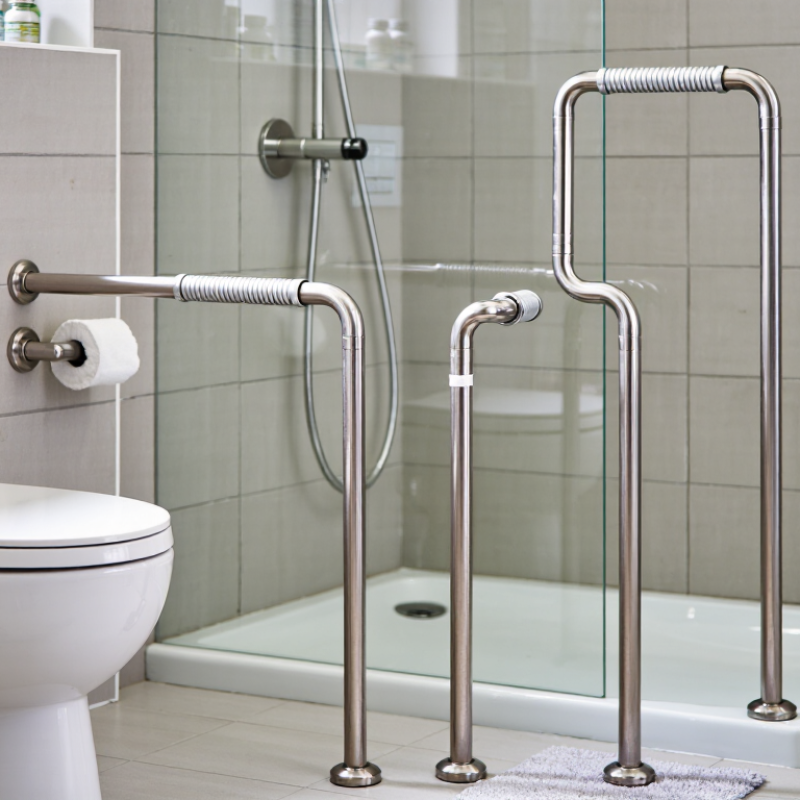
Safety handrails are fixed supports that help people balance during standing, walking, and transfers. They are commonly installed beside toilets, showers, steps, and beds. After surgery, pain, weakness, dizziness, or limited movement can make these moments risky. A rail provides a stable point to hold while the body adjusts. These small moments matter. Unlike a towel bar or loose chair, a properly installed handrail is designed to support controlled weight. It should not replace a prescribed walker, cane, or rehabilitation plan.
Choosing one requires more than measuring the wall. The height should match the user’s reach and movement pattern. The grip should feel secure, even with tired or damp hands. Smooth surfaces may become slippery. An overlooked detail is the wall itself. Drywall alone may not hold safely, so suitable anchors and professional installation are important. An occupational therapist, physical therapist, or qualified installer can assess transfer needs and mounting position. I would not assume one standard height suits everyone.
During recovery, use the rail slowly and avoid pulling sharply. Keep footwear dry and remove loose rugs nearby. If the rail shifts, stop using it. Do not improvise. A handrail can support a safer transfer, but it cannot correct poor balance, fainting, or severe weakness. Some patients need two rails, a shower seat, or supervised practice. That is easy to underestimate. Recovery is not perfectly linear. Pain may improve while balance remains unreliable, so the setup should be reviewed as movement changes.
What Safety Handrails Are and How They Support Post-Surgery Recovery
| Selection Dimension | What to Look For | Practical Guidance | Recovery Benefit |
|---|---|---|---|
| Purpose | A fixed bar or rail that provides a stable handhold for balance, transfers, and controlled movement. | Choose a handrail designed for the exact location, such as a staircase, bathroom, bedside area, or entrance step. | Can reduce the need to pull on unstable furniture and support safer movement during temporary weakness. |
| Load Capacity | A clearly stated user load rating supported by a secure installation system. | Select a product and mounting method that meet or exceed the user’s weight and the expected pulling or leaning forces. Verify local building requirements. | Improves confidence when standing, sitting, turning, or climbing steps. |
| Mounting Surface | Solid structural support, such as a wall stud, reinforced blocking, masonry, or an appropriately rated floor or ceiling structure. | Do not rely only on drywall, hollow doors, towel bars, curtain rods, or lightweight furniture unless a suitable reinforcement system is specifically designed for that purpose. | Reduces the risk of rail movement or detachment during a transfer. |
| Grip Diameter | A diameter that allows the user to wrap the hand comfortably around the rail. | Many accessibility guidelines use approximately 32–51 mm (1¼–2 in) for circular handrails. Confirm the user’s hand strength and dexterity before choosing. | Supports a more secure grip for users experiencing pain, weakness, or reduced coordination. |
| Clearance from Wall | Enough space for the hand and fingers between the rail and the wall. | A common accessibility reference is about 38 mm (1½ in) minimum clearance, subject to local code and the rail design. | Helps prevent knuckle contact and allows the user to maintain a continuous grip. |
| Length and Coverage | A rail long enough to cover the full transfer or travel path without requiring an unsupported gap. | Measure the staircase, shower entry, toilet transfer area, or bedside route. Avoid positioning that blocks doors, drawers, or mobility equipment. | Provides continuous support at moments when balance may be limited. |
| Surface and Grip | A comfortable, non-sharp, easy-to-clean surface with dependable grip when hands are dry or slightly damp. | Avoid loose covers, rough edges, slippery finishes, and designs that trap moisture or cleaning residue. | May improve hand control and reduce discomfort during repeated daily use. |
| Bathroom Use | Moisture-resistant construction and secure mounting suitable for the shower, tub, toilet, or entrance area. | A suction-mounted bar should not be treated as a permanent weight-bearing grab bar unless it is specifically rated and approved for that use. | Supports safer transfers in areas where wet floors can increase slip risk. |
| Visibility | A rail that contrasts clearly with the surrounding wall or background. | Use adequate lighting and avoid placing the rail where shadows, clutter, or open doors obscure it. | Makes the support easier to locate for people with reduced vision or fatigue. |
| Installation Height | A height that matches the user’s body, transfer technique, and the intended task. | There is no single height suitable for every situation. A clinician, occupational therapist, or qualified installer can assess the safest position. | Helps prevent overreaching, excessive bending, and awkward loading of a healing joint. |
| Location Planning | Placement along routes used immediately after surgery, including the bed-to-bathroom path and entry steps. | Keep pathways clear of loose rugs, cords, wet surfaces, and other trip hazards. Consider whether a walker or cane must also fit through the area. | Supports safer independence without creating new obstacles. |
| Post-Installation Check | No looseness, rotation, sharp edges, exposed fasteners, or interference with doors and equipment. | Test the rail gradually and inspect it regularly, especially after heavy use, moisture exposure, or changes in the wall or surrounding structure. | Helps identify problems before the rail is needed for an urgent transfer. |
| Professional Assessment | Individualized advice based on the operation, weight-bearing restrictions, balance, strength, pain, and home layout. | Ask the surgeon, physiotherapist, occupational therapist, or qualified accessibility professional for guidance when mobility is restricted or fall risk is high. | Aligns the handrail setup with the recovery plan and reduces the chance of using the rail in an unsafe way. |
General safety information: handrails and grab bars supplement, but do not replace, prescribed mobility aids or professional medical advice. Follow the surgeon’s instructions regarding weight-bearing and movement restrictions.
Ask the surgical team about weight-bearing limits, pain, dizziness, and stair use. Observe transfers from the bed, chair, and toilet. Note walkers, weak grip, limited vision, and nighttime bathroom trips. A quick inspection can miss important risks.
Place it along the person’s real walking path, not where it merely looks convenient. Check balance changes near steps, wet floors, rugs, and bathroom entrances. The rail should attach to a load-bearing surface. Placement may need revision.
A horizontal rail can support hallway walking. A vertical bar may offer better leverage beside a toilet or shower. A fold-down rail can help in a tight bathroom. It requires strong wall reinforcement and clear transfer space.
A gripping diameter between 1.25 and 2 inches usually supports a firm hold. Leave about 1.5 inches between the rail and wall. Measure the user’s actual reach and elbow position. Standard height is only a starting point.
Consider body weight, downward pressure, and sudden pulling together. A 250-pound concentrated-force benchmark may guide selection, but it is not a medical-device guarantee. Check the rail rating, fasteners, and wall structure. Stud-mounted fixing is usually more dependable than drywall anchors alone.
Place both feet securely before standing. Hold the rail, pause, and rise slowly. Avoid sharp pulling, especially after anesthesia or joint surgery. Move deliberately. A rail supports movement; it does not replace professional advice.
Check for movement, loose screws, cracked supports, rust, and sharp edges before use. Recheck fasteners weekly during early recovery. Test the rail from different angles with professional guidance. Do not suddenly throw full body weight against it.
Reassess when pain, balance, strength, or walking ability changes. Ask a physical or occupational therapist to review placement. Improve lighting near steps and bathrooms. No setup is perfect. Small changes can expose new hazards.
Safety handrails can provide essential support during post-surgery recovery by improving balance, reducing strain, and increasing confidence during daily movements. Before choosing one, consider the patient’s mobility, strength, surgical limitations, fall risk, and the areas where assistance is most needed. What are the best safety handrails for post-surgery recovery? The answer depends on the user’s condition, available space, and the type of support required. Select a handrail with a comfortable grip, suitable length and diameter, secure mounting, and a weight capacity that safely exceeds the user’s needs.
Handrails should be installed in practical locations such as bathrooms, beside toilets, near showers, along stairways, and next to beds or frequently used pathways. Proper positioning should provide stable support without blocking movement or creating tripping hazards. During recovery, users should hold the rail firmly, move slowly, and follow professional medical advice. Regularly inspect screws, brackets, surfaces, and wall connections for looseness, damage, or wear, and clean the handrail routinely to maintain a safe and reliable recovery environment.

 Avelar Medical