How to Choose Efficient Crash Cart Features for Emergencies?

Time:2026-05-11 Author:Oliver
0%

When it comes to emergencies, the efficiency of a crash cart can make all the difference. Dr. John Smith, a leading expert in emergency medicine, states, "The right features can turn a chaotic situation into effective care." This underscores the importance of understanding what features make a crash cart efficient in emergencies.

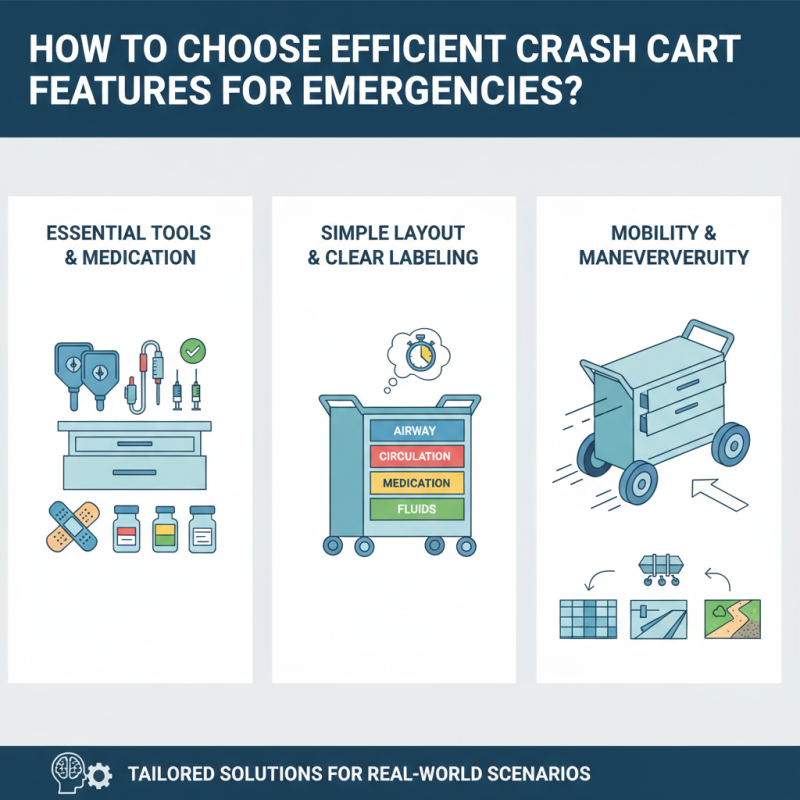
A well-equipped crash cart must contain essential tools and medications easily accessible to medical personnel. It should have a simple layout that allows for quick identification of items during critical moments. Clear labeling is vital for swift response, yet many carts fall short in this area.

Additionally, the cart’s mobility is crucial. A lightweight design with sturdy wheels enables easy transport across varied environments. Many carts, however, lack the necessary maneuverability, hindering rapid deployment. As we strive for improvements, tailored solutions that reflect real-world scenarios are essential in enhancing crash cart functionality.
How to Choose Efficient Crash Cart Features for Emergencies?

Identifying Essential Equipment for Crash Carts in Emergencies

In emergencies, having a well-equipped crash cart is vital. Identifying essential equipment can save lives. Studies show that 90% of cardiac arrest cases require immediate intervention. Therefore, crash carts must contain critical items like defibrillators and airway management tools.

Basic supplies should include oxygen masks, intubation kits, and IV fluid sets. According to the Emergency Medicine Journal, timely access to these tools increases survival rates significantly. Ensure your crash cart is stocked with emergency medications, such as epinephrine and atropine. These drugs are crucial in managing life-threatening situations.

Here are some tips for maintaining an efficient crash cart: Regularly check expiration dates and restock supplies. Staff training is essential for quick action. Encourage team drills to enhance familiarity with each item. Finally, always assess your cart's layout. An organized setup allows for swift retrieval during emergencies. These small steps can make a major difference in critical moments.

Evaluating Accessibility and Organization of Crash Cart Contents

In emergencies, the accessibility and organization of crash cart contents can significantly impact patient outcomes. A well-structured crash cart should provide critical supplies swiftly. A report from the Institute for Healthcare Improvement notes that 30% of code blue incidents are delayed due to disorganized emergency equipment. This statistic highlights the necessity of an efficient layout.

Evaluation of contents should include clear labeling and logical placement. For instance, medications can be grouped by function, and equipment should be positioned for immediate access. Studies reveal that crash carts with color-coded sections improve retrieval speed by 25%. Effective labeling minimizes search time in critical moments.

Tip: Regularly review cart contents. This ensures supply readiness and the correct medication is available.

Frequent drills can improve team familiarity with the crash cart. In one hospital, regular training sessions reduced emergency response times by 15%. Reflect on areas for improvement. An organization-wide survey could reveal gaps in accessibility. Remember, in times of crisis, seconds matter.

Prioritizing Medication Management in Crash Cart Design

When designing a crash cart, effective medication management is vital. Medications must be organized for quick access during emergencies. Each compartment should be clearly labeled. This helps ensure that healthcare professionals can find what they need without delay.


Regular updates to the medication inventory are crucial. Outdated medications can lead to dire consequences in a critical situation. Staff training on using the crash cart also enhances efficiency. Personnel should be familiar with the layout and contents. Routine drills can build confidence in navigating the cart effectively.


It's essential to periodically review the crash cart design. Input from staff who use it daily can highlight areas needing improvement. This reflection ensures that the crash cart adapts to changing protocols and medication needs. Proper design should focus on both access and safety for all patients.

Incorporating Technology for Enhanced Emergency Response

In emergency situations, technology can significantly improve response times. A report by the American Hospital Association states that effective communication tools can reduce patient morbidity by 30%. Implementing devices like portable defibrillators or automated medication dispensers within crash carts can save crucial minutes. These tools enhance collaboration among medical staff during critical moments.

Integrating real-time data tracking systems into crash carts can also streamline operations. A recent study found that healthcare facilities using electronic health records experienced a 25% decrease in errors related to medication administration. However, relying solely on technology can pose challenges. Training staff to effectively use new technology is essential. Frequent updates and maintenance are required to keep systems functional, which can be a logistical hurdle.

Moreover, while technology enhances efficiency, it can also create dependency. In high-pressure situations, staff may struggle if systems fail or if there is a lack of familiarity with equipment. This highlights the importance of routine drills and consistent training to ensure that medical teams remain adept at handling emergencies, regardless of technological aids. Regular feedback and adjustments can help refine these processes for better preparedness.

Training Staff on Crash Cart Utilization and Maintenance

Training staff on crash cart utilization and maintenance is crucial for emergency preparedness. Regular training sessions can help staff become familiar with each item in the crash cart. It’s beneficial to practice scenarios that require swift action. Staff should know how to swiftly access equipment and medications. This knowledge can save lives.

However, training should not be a one-time event. It should be an ongoing process. Regular refresher courses ensure that the staff retains knowledge. Some may feel overwhelmed by the volume of information. Simulated drills can help build confidence. Mistakes made during practice should be viewed as learning opportunities.

Additionally, feedback should be encouraged. Staff may have insights into improving cart organization or training methods. It’s vital to address these suggestions. This can lead to a more tailored approach to training. A collaborative environment enhances readiness. Ultimately, the goal is to ensure staff feel prepared and competent.

FAQS

: Why is a well-equipped crash cart important in emergencies?

: A well-equipped crash cart is vital as it can save lives in critical situations.

What are some essential items to include in a crash cart?

Essential items include defibrillators, airway management tools, oxygen masks, and emergency medications.

How can organization impact the effectiveness of a crash cart?

A disorganized crash cart can delay emergency response, negatively affecting patient outcomes.

How can effective labeling improve crash cart efficiency?

Effective labeling helps healthcare professionals find necessary items quickly, reducing search time during emergencies.

Why should regular training be conducted for staff regarding the crash cart?

Regular training familiarizes staff with the crash cart layout, improving response times and confidence.

How often should the contents of a crash cart be reviewed?

Regular reviews ensure medications are up to date and supplies are ready for use.

What can be done to enhance the crash cart's accessibility?

Group medications by function and position equipment for immediate access to enhance accessibility.

How do routine drills impact emergency response times?

Routine drills can significantly reduce emergency response times by building team familiarity with the cart.

What is a potential flaw in crash cart design?

A poorly designed cart may not adapt to changing medication needs, leading to inefficiency.

How can staff input improve crash cart effectiveness?

Staff input can identify gaps and improve the crash cart's design to meet everyday needs better.

Conclusion

When considering "What features make a crash cart efficient in emergencies?", it is crucial to identify essential equipment that should be readily available during critical situations. A well-organized crash cart must prioritize accessibility, ensuring that healthcare professionals can quickly find and utilize necessary tools and medications. Additionally, the management of medications plays a vital role in crash cart design, requiring clear labeling and proper storage to facilitate swift response during emergencies.

Incorporating advanced technology can further enhance emergency response capabilities, such as automated tracking systems or integrated communication tools. However, the effectiveness of a crash cart ultimately relies on the training provided to staff, ensuring they understand how to utilize and maintain the cart effectively. By focusing on these features, healthcare facilities can ensure their crash carts are equipped to handle emergencies efficiently, ultimately improving patient outcomes.

Oliver

Oliver

Oliver is a seasoned marketing professional with a wealth of expertise in driving brand awareness and engagement. With a deep understanding of our company's product offerings, he consistently delivers high-quality content that enriches our professional blog. His insights not only shed light on......